A sewer gas smell inside your home is not just unpleasant. It usually means there is a gap somewhere in the barrier that is supposed to keep sewer gas out of your living space. In Central Florida, where guest bathrooms and second showers often sit unused for weeks at a time, this smell shows up more often than most homeowners expect.
The good news is that most causes are straightforward to identify once you know where to look. Here are the most common sources of sewer gas odor in Florida homes, ranked from most to least frequent.
Dry P-Traps: The Most Common Cause in Florida Homes
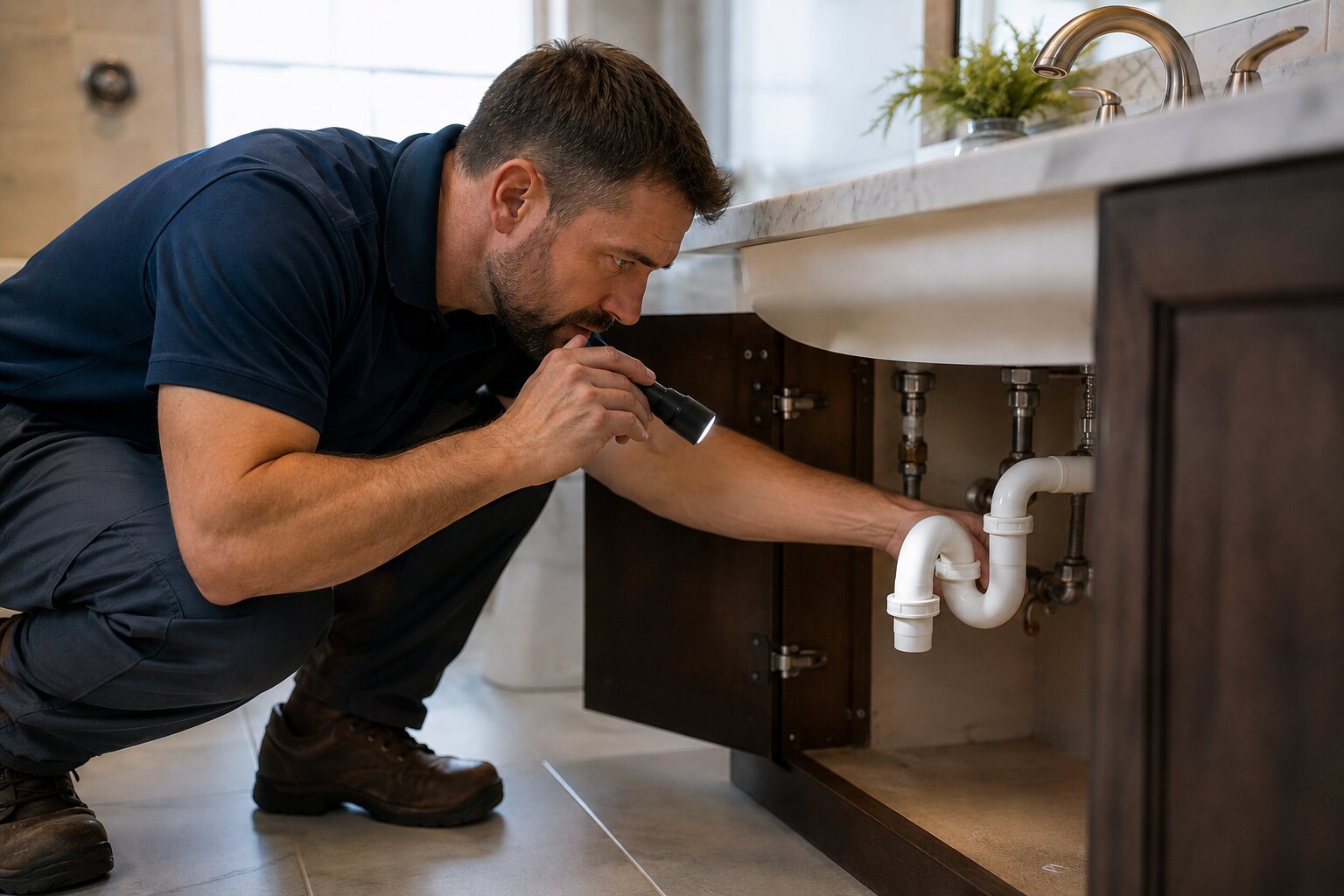
Every drain in your home, from sinks to showers to floor drains, has a P-trap: a curved section of pipe that holds a small amount of water at all times. That water seals the drain and blocks sewer gas from rising back up into the room.
- Guest bathrooms, rarely used showers, and laundry room floor drains are the most common offenders, since water in the trap evaporates after weeks without use.
- Second homes and vacation rentals in Central Florida are especially prone to this, since entire bathrooms can sit empty for extended stretches.
- The fix is simple: run water in the fixture for a minute to refill the trap, and the smell typically disappears within minutes.
The Pour-a-Cup-of-Water Test
Before assuming a bigger problem exists, try this test on any suspect drain.
- Pour a cup of water slowly into the drain opening, letting it fill the trap underneath.
- Wait a few minutes and check whether the odor has cleared.
- If the smell returns quickly, water may be evaporating unusually fast, which can point to a slow leak in the trap itself.
- If the smell does not clear at all, the source is likely elsewhere and not a dry trap.
A Failed Toilet Wax Ring
The wax ring beneath a toilet forms the seal between the toilet base and the drain flange. When it fails, sewer gas can escape around the base of the toilet rather than through the bowl.
- A telltale sign is odor that is stronger near the floor around the toilet base rather than coming from the bowl itself.
- Rocking or wobbling when you sit on the toilet often accompanies a failed wax ring.
- Water staining or soft flooring around the base is a sign the seal has been compromised for a while and may involve more than just odor.
Cracked Cast Iron Vent Stacks
Older Central Florida homes, particularly those built before the widespread use of PVC plumbing, often still have cast iron vent stacks running through walls and the attic. Over decades, these pipes can corrode and crack.
- A cracked vent stack allows sewer gas to escape into wall cavities or attic space rather than venting safely above the roofline.
- This type of leak is harder to pinpoint since the smell may seem to come from a wall or ceiling rather than a fixture.
- Homes with visible rust staining on cast iron pipes in a crawlspace, basement, or attic are more likely candidates for this issue.
Roof Vent Blockages
Every plumbing system relies on a vent that runs through the roof to let sewer gas escape safely outside and to allow drains to flow properly. When that vent is blocked, gas can be pushed back down into the home instead.
- Leaves, nesting debris, and even small animals can block roof vents in Florida, especially after storm season.
- A blocked vent often causes gurgling drains in addition to odor, since air cannot properly vent while water is draining.
- This is typically diagnosed from the roof or with a camera run down the vent stack.
When the Smell Signals a Failing Under-Slab Drain Line
If the odor is persistent, does not respond to the cup-of-water test, and is not tied to a specific fixture, the cause may be a cracked or failing drain line running beneath the slab.
- Under-slab lines in Central Florida homes can crack from ground shifting, root intrusion, or age-related deterioration.
- This type of leak often comes with additional warning signs, including warm or damp spots on flooring, a higher water bill, or sewage smells that worsen after heavy rain.
- A camera inspection is the most reliable way to confirm whether a slab leak is the source before any demolition is considered.
Getting to the Source of a Sewer Gas Smell in Orlando
Most sewer gas odors trace back to a simple, inexpensive fix like refilling a dry trap or replacing a wax ring. Persistent odor that does not respond to basic checks deserves a closer look, since it can point to a vent issue or a failing line beneath the home. If the smell in your home will not go away, a licensed plumber can pinpoint the exact source and recommend the right fix before it becomes a bigger problem.