Hearing the sound of running water somewhere in your home when every faucet, toilet, and appliance is off is one of those moments that immediately puts most homeowners on edge. In a slab-on-grade home, that sound often means water is moving somewhere it should not be, and the water meter is the fastest way to confirm it and start narrowing down where.
This guide walks through a simple triage process you can run yourself before deciding whether the issue needs a plumber right away.
Step One: Shut Off Every Fixture and Appliance
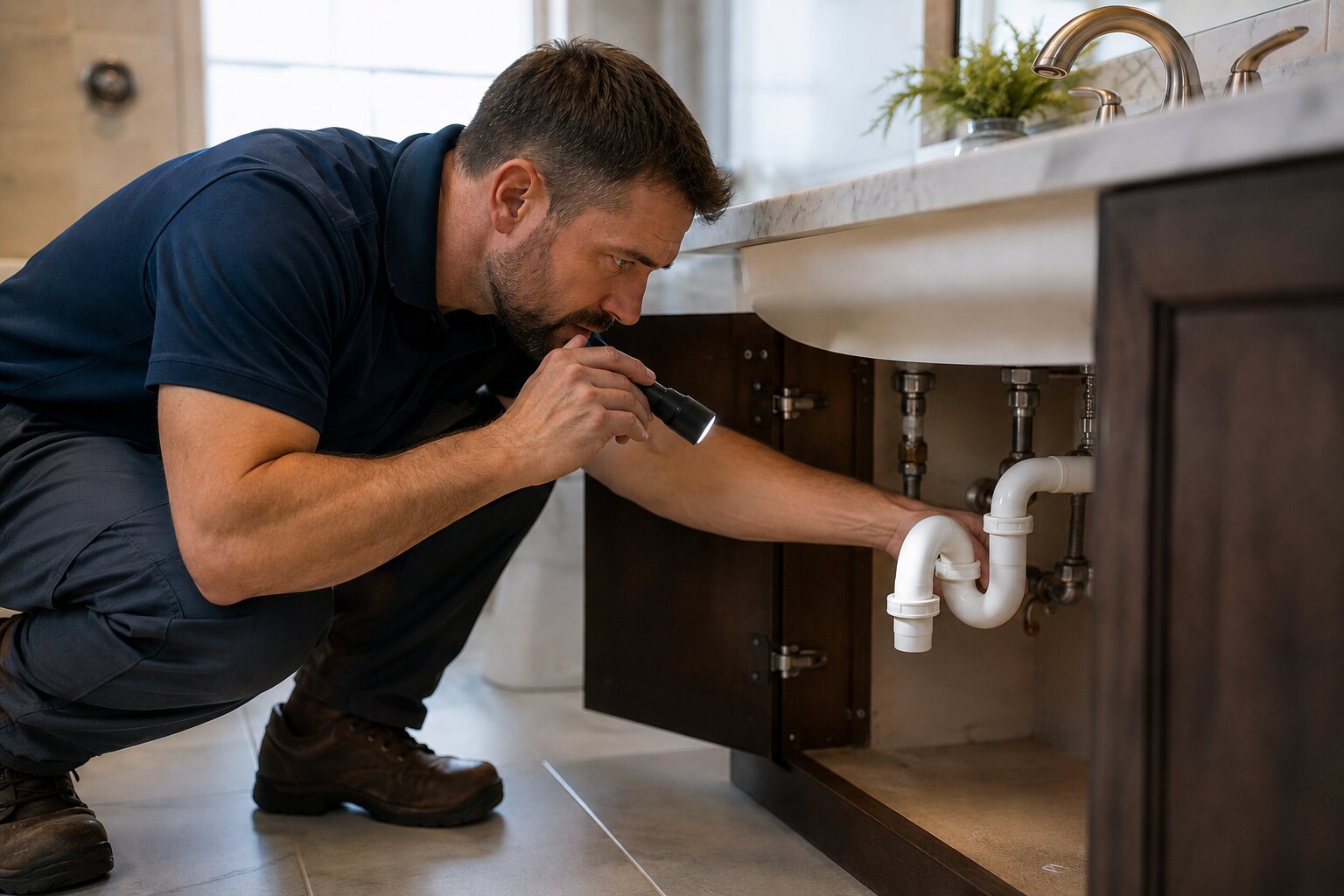
Before checking anything else, make sure the sound is not coming from something obvious.
- Confirm every faucet is fully closed, including outdoor hose bibs.
- Check that no toilet is running by listening closely at the tank or lifting the lid to observe the fill valve.
- Pause any appliance that uses water, including the dishwasher, washing machine, ice maker, and water softener regeneration cycle.
- If the sound continues after everything is confirmed off, move to the water meter.
Step Two: Read Your Water Meter Leak Indicator
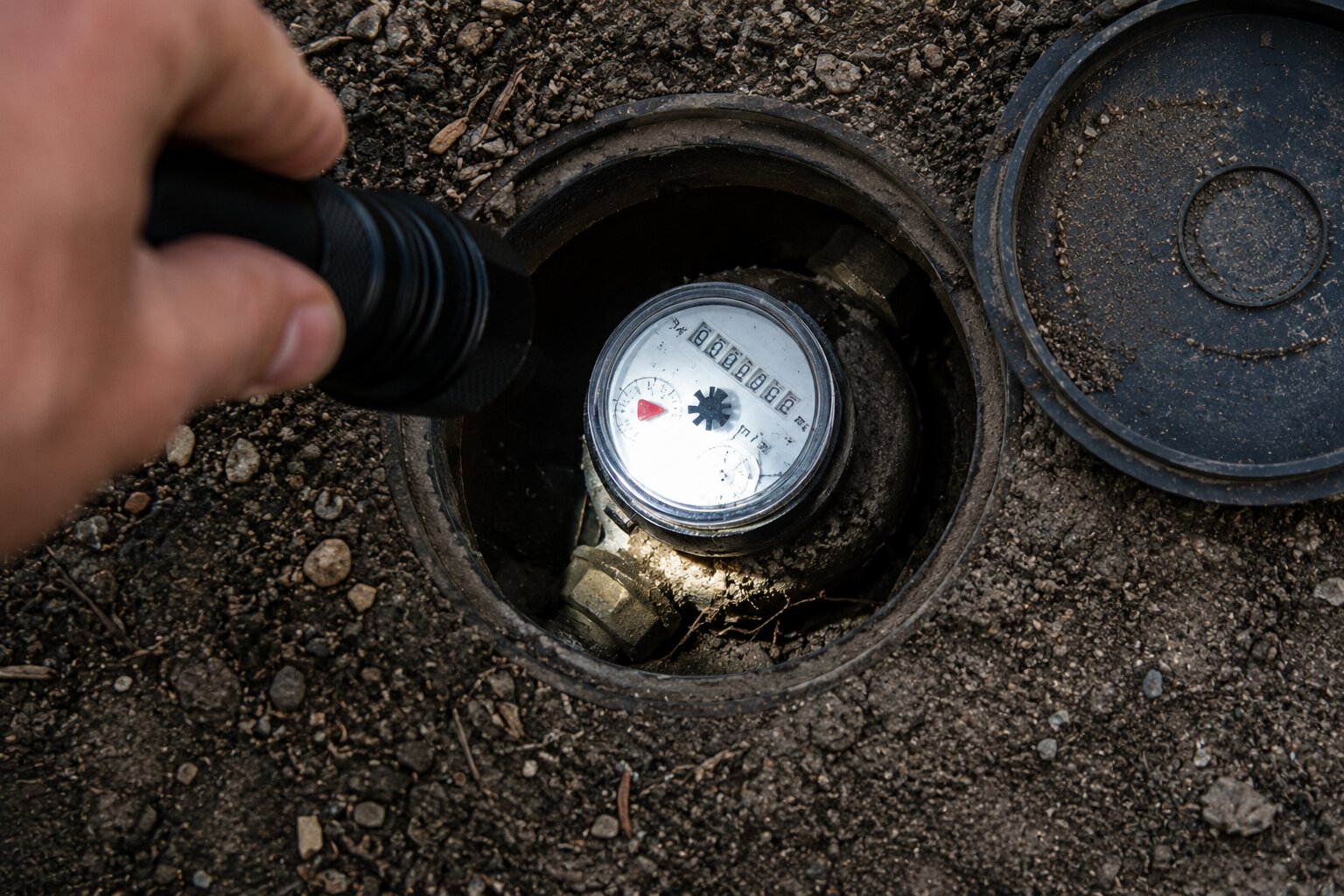
Most water meters have a small triangular or star-shaped dial, often called the leak indicator, that spins whenever any amount of water is flowing through the line.
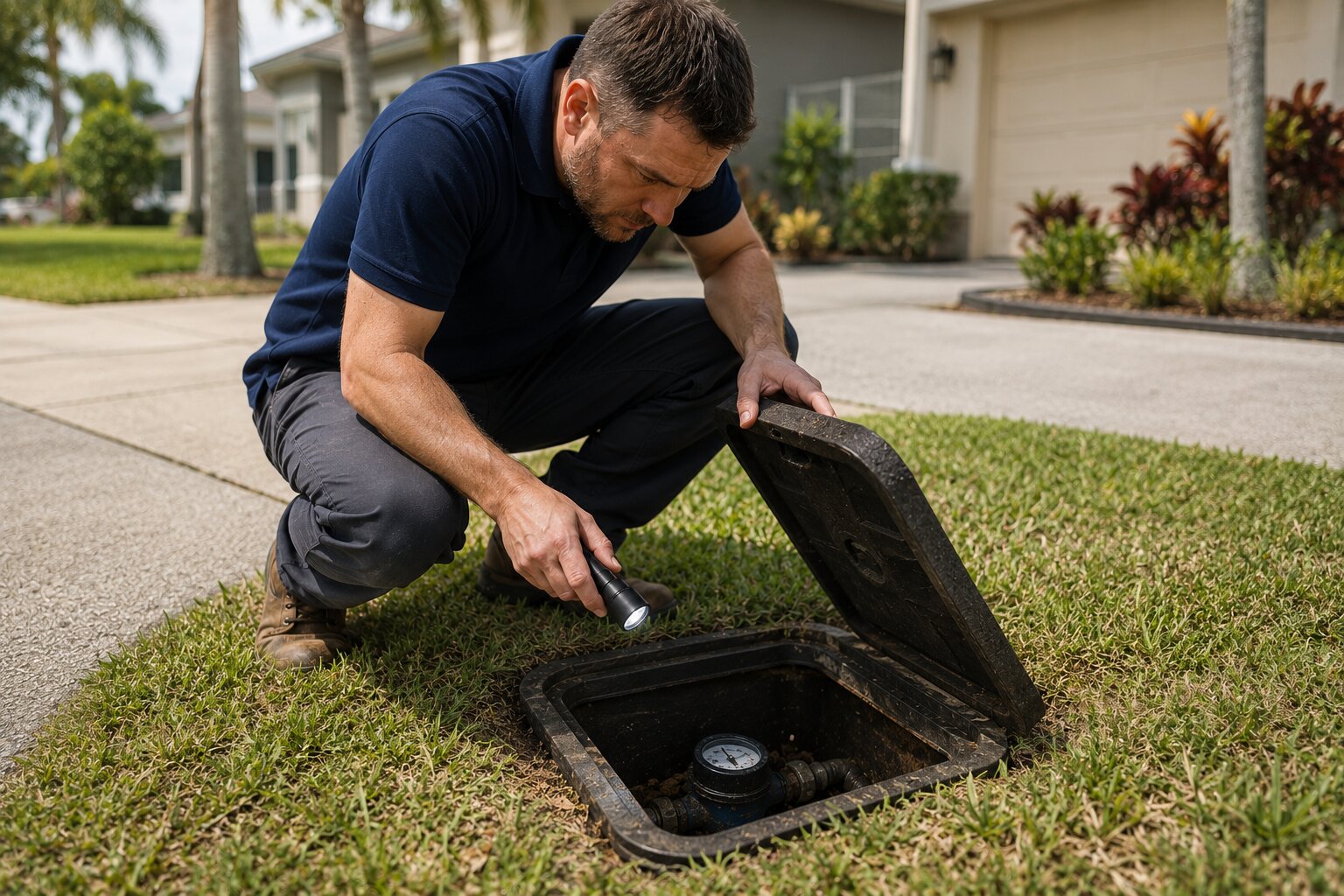
- Locate your meter, typically in a box near the street or property line, and remove the lid.
- With everything in the house confirmed off, watch the leak indicator dial for movement.
- If the dial is spinning, even slowly, water is flowing somewhere on your side of the meter, confirming an active leak rather than a false alarm.
- If the dial is completely still, the sound you are hearing may be unrelated to a leak, such as normal pipe expansion, and does not require emergency action.
Step Three: Isolate the Irrigation System
Irrigation lines are one of the most common sources of a spinning meter with no visible water inside the home, since a break underground can run for a long time before surfacing.
- Locate your irrigation system's shut-off valve, separate from your main house shut-off, and close it.
- Recheck the meter's leak indicator after isolating irrigation.
- If the dial stops spinning once irrigation is isolated, the leak is very likely in the irrigation line rather than your home's plumbing, which changes both the urgency and who typically handles the repair.
Step Four: Isolate the Main Water Line to the House
If the meter is still spinning after irrigation has been ruled out, the next step narrows things down further.
- Locate your main shut-off valve where the water line enters the house and close it fully.
- Recheck the meter's leak indicator.
- If the dial stops, the leak is confirmed to be between the meter and your main shut-off valve, which is typically the property owner's responsibility to repair.
- If the dial continues spinning even with the main valve closed, the leak may be on the utility side of the meter, which is worth reporting to your water provider before assuming it is a plumbing issue you need to fix.
What a Spinning Meter With No Visible Water Usually Means
In a slab-on-grade home, a spinning meter with no visible leak almost always points to water escaping somewhere underground or beneath the slab rather than through an obvious fixture.
- This is commonly a supply line running beneath the slab, an irrigation line break, or occasionally a fitting failure at the meter connection itself.
- The absence of visible water does not mean the leak is minor. Underground and under-slab leaks can run for extended periods before any surface signs appear, including higher water bills or warm, damp flooring.
- This is the point where professional leak detection equipment, including acoustic listening devices and thermal imaging, becomes the most efficient way to pinpoint the exact location without unnecessary digging or demolition.
What It Costs to Confirm the Exact Location
Homeowners often want to know the leak's precise location before agreeing to any repair, and that is a reasonable ask given the cost difference between a simple fix and a larger one.
- Professional leak detection typically involves a combination of acoustic equipment to listen for the sound of escaping water and thermal imaging to spot temperature differences caused by water in unexpected areas.
- This diagnostic step is far less expensive than exploratory digging or opening a slab without knowing exactly where to look.
- Once the leak is pinpointed, a plumber can give you an accurate scope and cost for the actual repair rather than an estimate based on guesswork.
Getting Your Leak Confirmed and Fixed
A spinning water meter with everything off is one of the clearest signs of a hidden leak, and it is not something to leave unaddressed while your water bill climbs. Working through the shut-off and isolation steps above will tell you whether the issue is in your irrigation system or your home's main line. From there, a licensed plumber with proper leak detection equipment can confirm the exact location and get it repaired.