Watching dark, foul-smelling water rise up through a shower or tub drain is one of the more alarming things that can happen in a home. It is also one of the clearest signals that something serious is happening in the plumbing system, and it needs an immediate, calm response rather than a wait-and-see approach.
Unlike a slow drain or a minor clog, sewage backing up through a fixture almost always points to a blockage somewhere in the main line, affecting the entire home rather than just one drain.
Why the Shower or Tub Backs Up First
Every drain in the home connects to the same main sewer line, which slopes downward toward the street or septic system. When that main line becomes blocked, wastewater has nowhere to go, and it looks for the lowest point in the system to escape from.
In many homes, a shower or tub drain sits at a lower elevation than the toilet, which is why sewage often appears there first, sometimes before a toilet shows any sign of a problem at all. This is an important early warning, not a coincidence, and it deserves an immediate response.
What to Do in the Next 10 Minutes
Every drop of water sent down any drain in the home, from a sink, washing machine, dishwasher, or another shower, adds pressure to an already blocked system and can push more sewage back into the lowest fixtures.
- Pause laundry loads in progress.
- Avoid running the dishwasher.
- Ask everyone in the household to avoid sinks and showers until the issue is resolved.
Do Not Flush Any Toilets
Flushing adds a large volume of water into a system that already cannot drain properly, which can force the backup further and faster, sometimes into additional fixtures throughout the house.
Keep People and Pets Away From the Area
Standing wastewater is a contamination risk, not just an unpleasant mess. Close off the affected bathroom or room if possible, and keep children and pets away until the area has been professionally addressed and cleaned.
Why This Is a Health Hazard
Sewage carries bacteria, viruses, and other pathogens that pose a real health risk on contact. This is not the same as ordinary cleaning water spilled from a bathtub.
- Avoid direct skin contact with the water.
- Do not attempt to clean up standing sewage without gloves, boots, and proper protective equipment.
- Ventilate the area if possible while avoiding walking through the contaminated water more than necessary.
- If the backup is significant, professional water damage cleanup may be needed in addition to plumbing repair.
Finding Your Outdoor Cleanout
Most homes have an outdoor sewer cleanout, a capped pipe usually located near the foundation or along the path the sewer line takes toward the street. It typically has a screw-on or push-in cap sitting slightly above ground level.
Knowing where this cleanout is located matters for two reasons. It gives a plumber fast access to clear the main line without having to work through a fixture inside the home, and in some cases, carefully relieving pressure at the cleanout can reduce how much sewage continues backing up indoors while you wait for help. This step is best left to a professional, since opening a pressurized cleanout incorrectly can create a bigger mess.
Why This Is Almost Always a Main Line Blockage
A single slow or clogged drain is usually a local, isolated issue. Sewage backing up into a shower or tub is different, and it typically points to a blockage affecting the entire main line rather than one fixture.
Common causes in Orlando homes include:
- Tree root intrusion into aging pipe joints
- Grease buildup accumulated over time
- "Flushable" wipes and other items that do not break down
- Pipe corrosion or a collapsed section of older clay or cast iron pipe
- Ground shifting affecting buried sewer lines
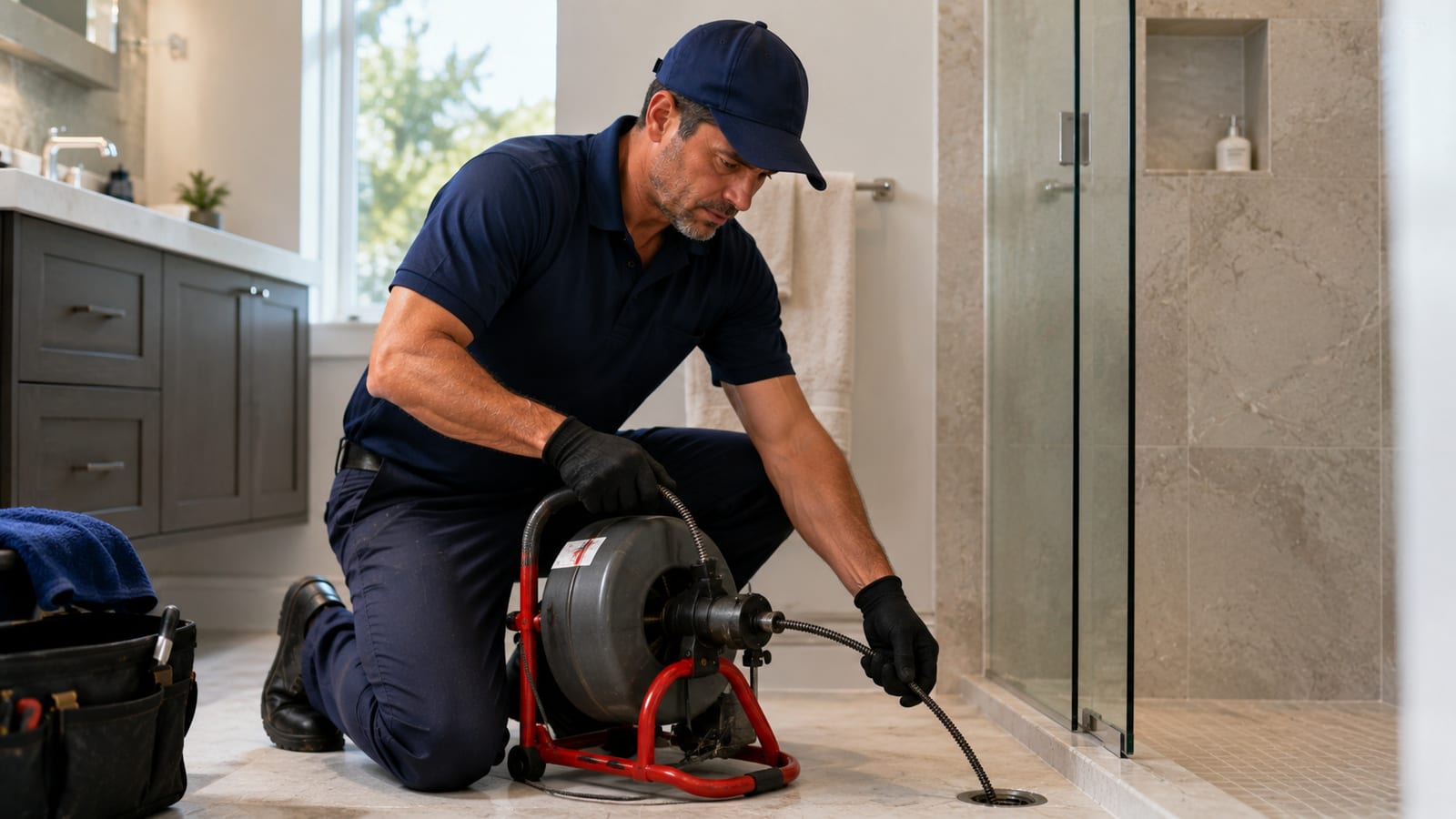
Because the blockage sits downstream of every drain in the house, clearing it usually requires equipment such as a sewer camera, an auger, or hydro jetting rather than a simple plunger.
How Plumbers Clear a Main Line Blockage
Once the immediate situation is stabilized, a plumber typically works through a few steps to locate and clear the blockage without unnecessary guesswork.
- A sewer camera inspection identifies the exact location and cause of the blockage, whether it is roots, grease, a foreign object, or a damaged section of pipe.
- Hydro jetting uses high-pressure water to clear grease, sludge, and root intrusion from the inside of the line, often more thoroughly than a standard auger alone.
- Access is usually gained through the outdoor cleanout rather than through a fixture inside the home, which keeps the process cleaner and more efficient.
Knowing the cause also helps determine whether a one-time clearing is enough or whether a recurring issue, such as ongoing root intrusion or an aging pipe section, needs a longer-term repair plan.
What Not to Do
- Do not use chemical drain cleaners. They are not designed for main line blockages and can create hazardous reactions when mixed with standing sewage.
- Do not attempt to plunge an overflowing fixture, since displaced water and waste have nowhere else to go but onto the floor.
- Do not run a snake into the line yourself without knowing where the cleanout is, since this can push a blockage further in rather than clearing it.
Why This Can't Wait
Sewage backups do not resolve on their own, and they typically get worse the longer the main line stays blocked. Continued use of any fixture in the home risks additional backups, further contamination, and more extensive cleanup.
If sewage is backing up into your shower, tub, or any other fixture, treat it as an emergency. Stop water use throughout the home, keep people and pets away from the affected area, and contact an emergency plumber who can locate the blockage, clear the main line, and help assess whether any additional cleanup or repair is needed.