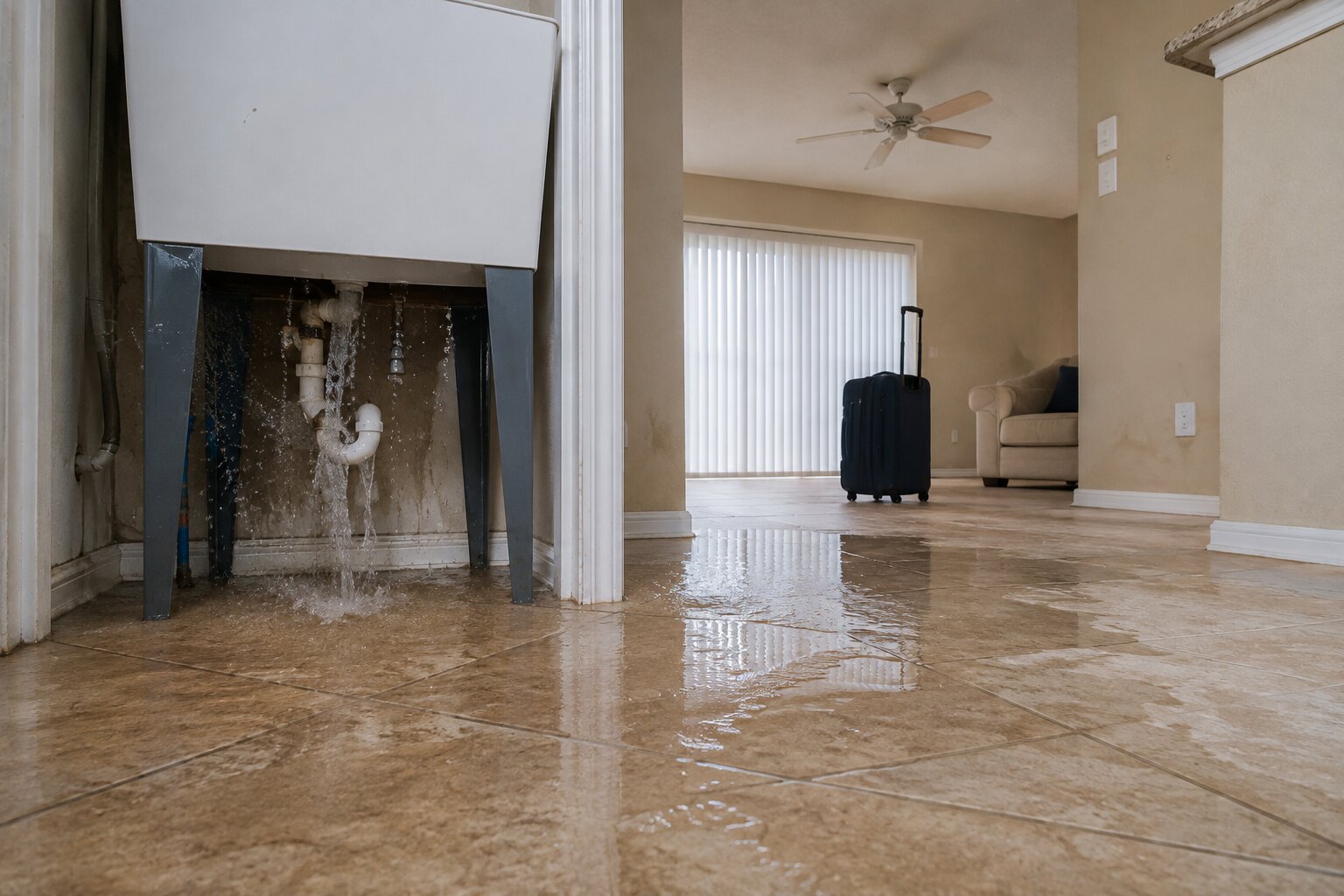
Central Florida is home to thousands of seasonal residents who split their time between here and other states, along with second-home owners who visit only a few weeks a year. That arrangement works well until a pipe fails while the house sits empty. A leak that would be caught in minutes in an occupied home can run for days or weeks in a vacant one, and the resulting damage is often severe by the time anyone finds it.
If you own a home you do not occupy year-round, a short pre-departure routine can be the difference between a minor repair and a total loss.
Why Vacant Homes Are at Higher Risk
An occupied home has built-in leak detection: someone notices a wet spot, a dripping sound, or a spike in water pressure almost immediately. A vacant home has none of that until a neighbor, property manager, or returning owner walks in.
- A supply line failure, water heater rupture, or ice maker connection leak can run continuously for weeks with no one to shut it off.
- Florida's heat and humidity accelerate mold growth once water is present, often within 24 to 48 hours.
- Insurance claims for long-term undetected leaks are frequently disputed or reduced, since insurers expect reasonable steps to have been taken to prevent exactly this scenario.
The Pre-Departure Shut-Off Procedure
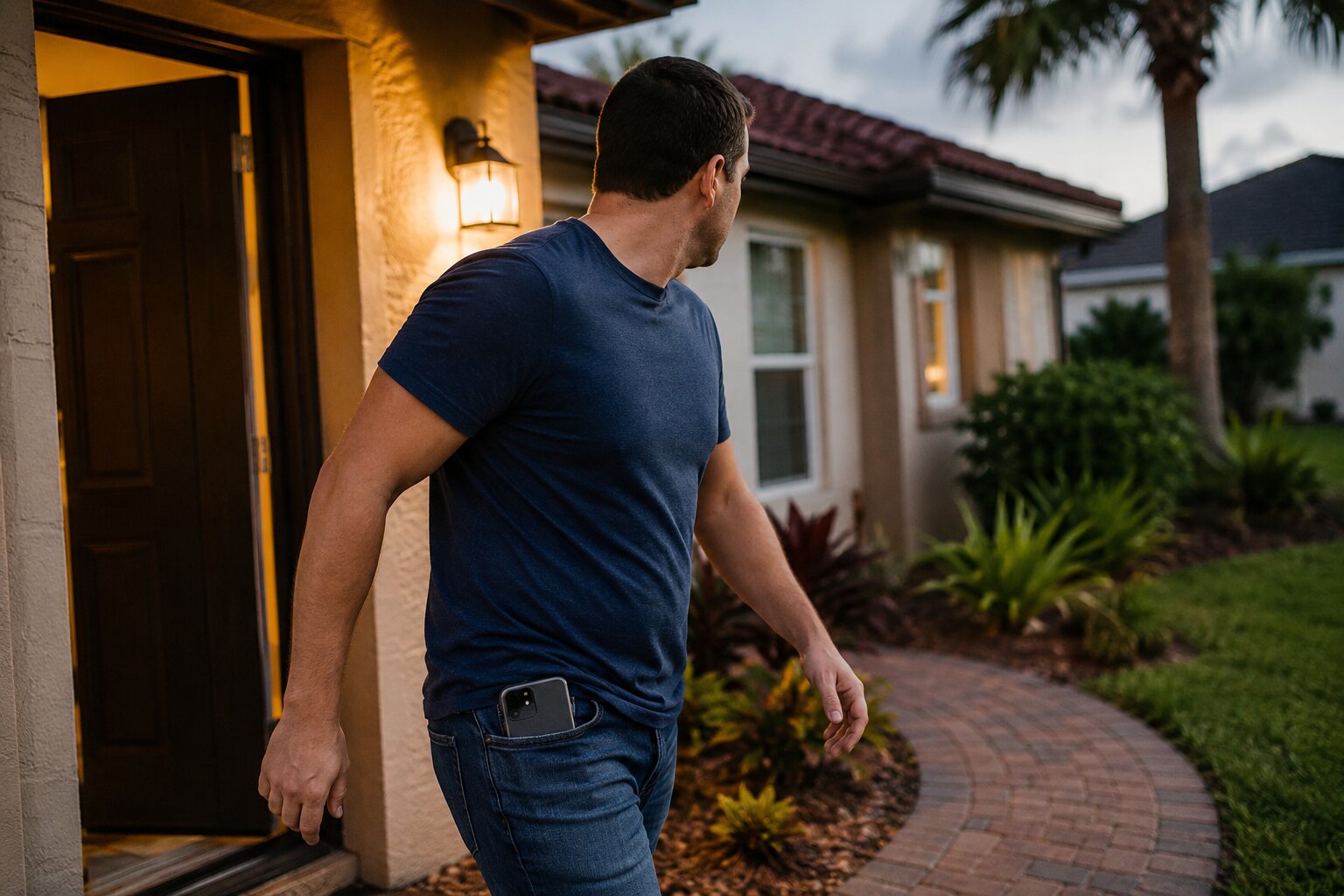
Before leaving for an extended period, walk through this checklist rather than just locking the door.
- Shut off the main water supply valve, or at minimum the supply valves to washing machines, ice makers, and any fixture prone to hose failure.
- Turn off or unplug the water heater, or switch it to vacation mode if available, to prevent it from cycling unnecessarily while unused.
- Check that all faucets are fully closed and that no toilet is running before you leave.
- If you have irrigation, confirm the system is set appropriately rather than left on a schedule with no one to notice a broken head or stuck valve.
Water Heater Vacation Mode
Most modern water heaters, including many tankless models, include a vacation or standby setting that reduces energy use without fully powering down the unit.
- This setting keeps the tank from working to maintain full temperature while unoccupied, reducing both energy waste and strain on the unit.
- For older tank water heaters without this feature, shutting off the water supply to the unit and switching off the breaker or gas supply is the safer option for extended absences.
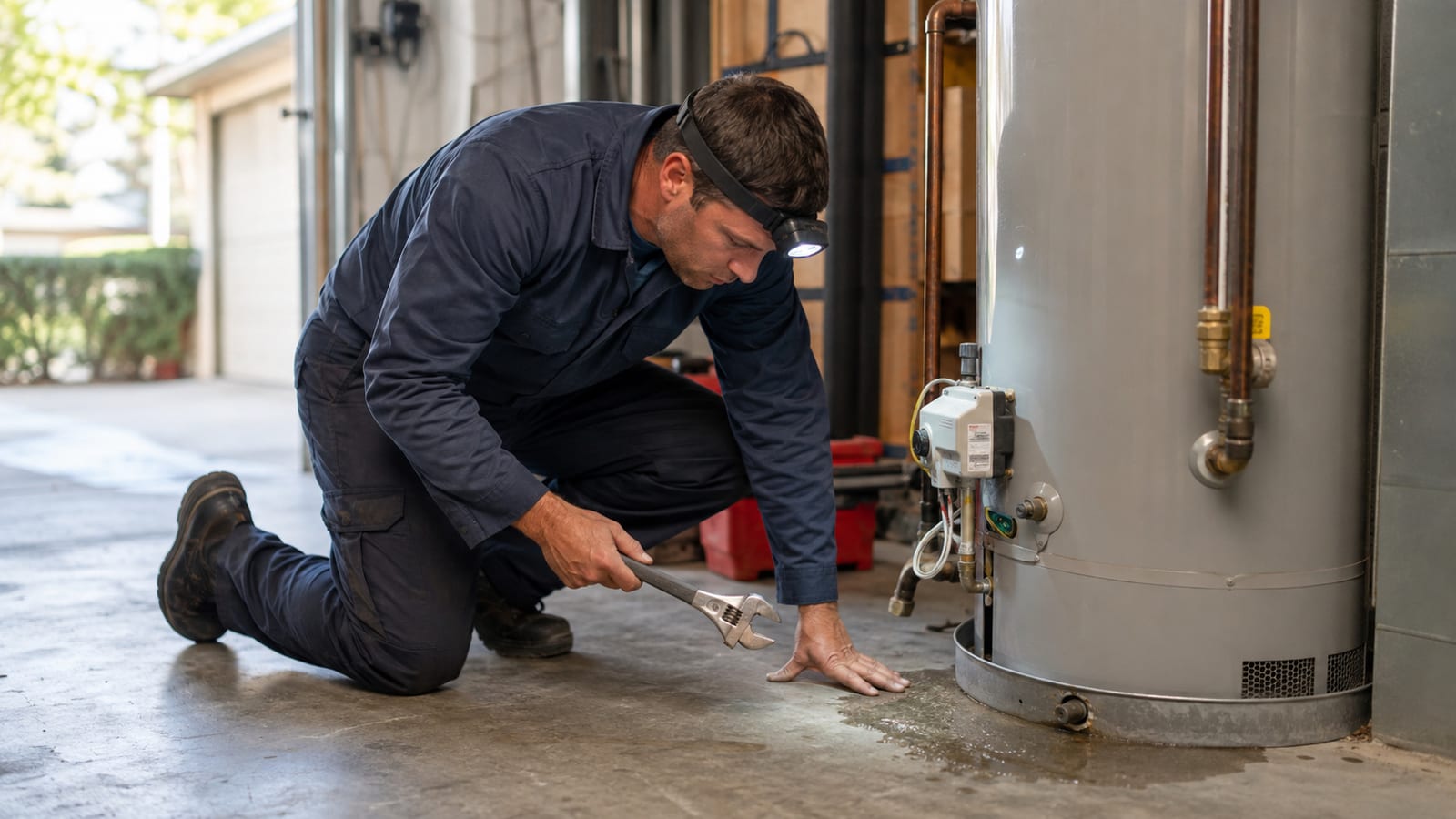
- A failing tank is one of the more common sources of major water damage in an unoccupied home, since a rupture can release the entire tank volume before anyone arrives.
Smart Leak Sensors and Automatic Shut-Off Valves
Technology has made it far easier to protect a home you are not physically present in.
- Wireless leak sensors placed near water heaters, under sinks, and behind washing machines send an alert to your phone the moment they detect moisture.
- Whole-home automatic shut-off valves monitor water flow and can close the main supply automatically if they detect a leak pattern consistent with a burst pipe or continuous running water.
- These systems are a meaningful upgrade for any part-time resident and are increasingly requested, and in some cases required, by insurers for high-value vacant properties.
Even with sensors installed, someone needs to be able to physically respond if an alert comes in or a neighbor calls.
- Identify a trusted local contact, whether a neighbor, family member, or property manager, who has a key and is willing to check the home periodically or respond to an alert.
- Make sure that contact knows where the main shut-off valve is located and how to operate it.
- Keep a plumber's contact information easily accessible for your local contact, rather than leaving them to search for help during an active emergency.
What Insurers Expect You to Have Done
Homeowners insurance for a vacant or seasonally occupied property often comes with specific expectations, and failing to meet them can affect a claim.
- Many policies require the water supply to be shut off, or the home to be checked at set intervals, during extended vacancies.
- Some insurers offer premium discounts for homes with monitored leak detection or automatic shut-off systems installed.
- Review your policy's vacancy clause specifically, since standard homeowners coverage sometimes changes terms after a property sits unoccupied for a defined period, commonly 30 to 60 days.
Protecting Your Central Florida Property Year-Round
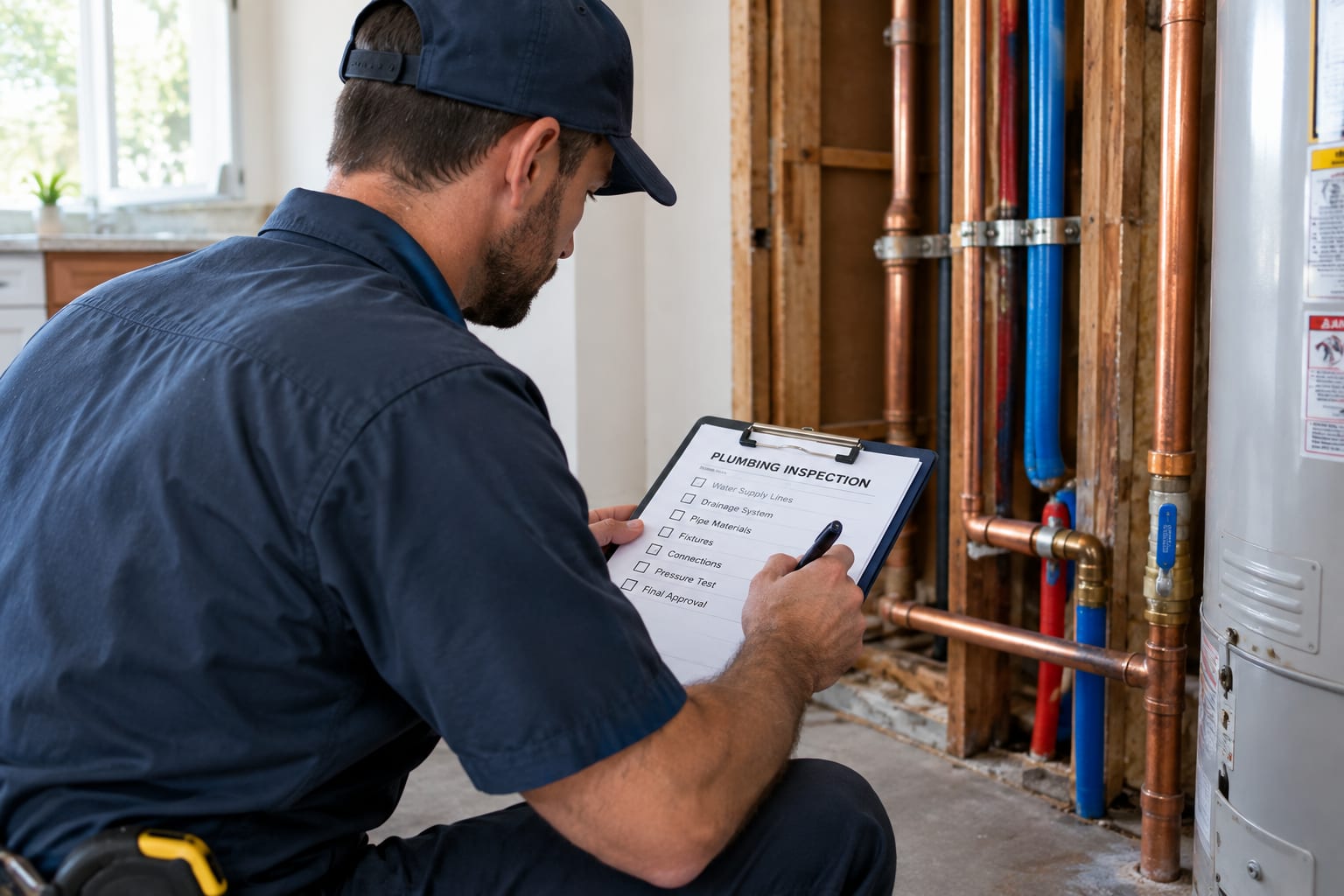
Whether you are away for a few weeks or several months, a burst pipe in an empty home can turn into one of the most expensive plumbing emergencies a homeowner faces. A short pre-departure routine, the right monitoring equipment, and a reliable local contact go a long way toward preventing it. If you want help evaluating your home's shut-off setup or installing leak detection before your next trip, a licensed plumber can walk through your property and recommend the right protection for your situation.