Knowing where your main water shut-off valve is located should not be something you figure out for the first time during a flood. Once a pipe bursts or a supply line fails, every second spent searching for the right valve adds to the water damage spreading across your floors and walls.
Most Central Florida homes have one of two shut-off options, and sometimes both. Knowing which one applies to your home, and confirming it actually works, is one of the simplest things a homeowner can do to prepare for a plumbing emergency.
Why Every Orlando Homeowner Should Know This Location
When water is actively leaking or spraying, the priority is stopping the flow as fast as possible. Trying to locate an unfamiliar valve while water is rising is stressful and slow, and every extra minute means more water reaching flooring, drywall, cabinets, and belongings.
Homeowners who already know their shut-off location, and know it works, can stop a leak in seconds rather than minutes. That difference often separates a minor cleanup from a major, expensive repair.
Two Common Shut-Off Locations in Central Florida Homes
The Curb Stop Near the Meter Box
Most homes have a curb stop valve located inside or near the water meter box, typically found in the ground near the sidewalk or property line. This valve is considered part of the water utility connection and gives you a way to shut off water before it enters your property line.
- Look for a small in-ground box with a metal or plastic lid near the street or sidewalk.
- The valve inside is often operated with a meter key or a flathead tool rather than by hand.
- This location works even if an issue exists somewhere inside your home's own shut-off system.
The Interior or Exterior Ball Valve
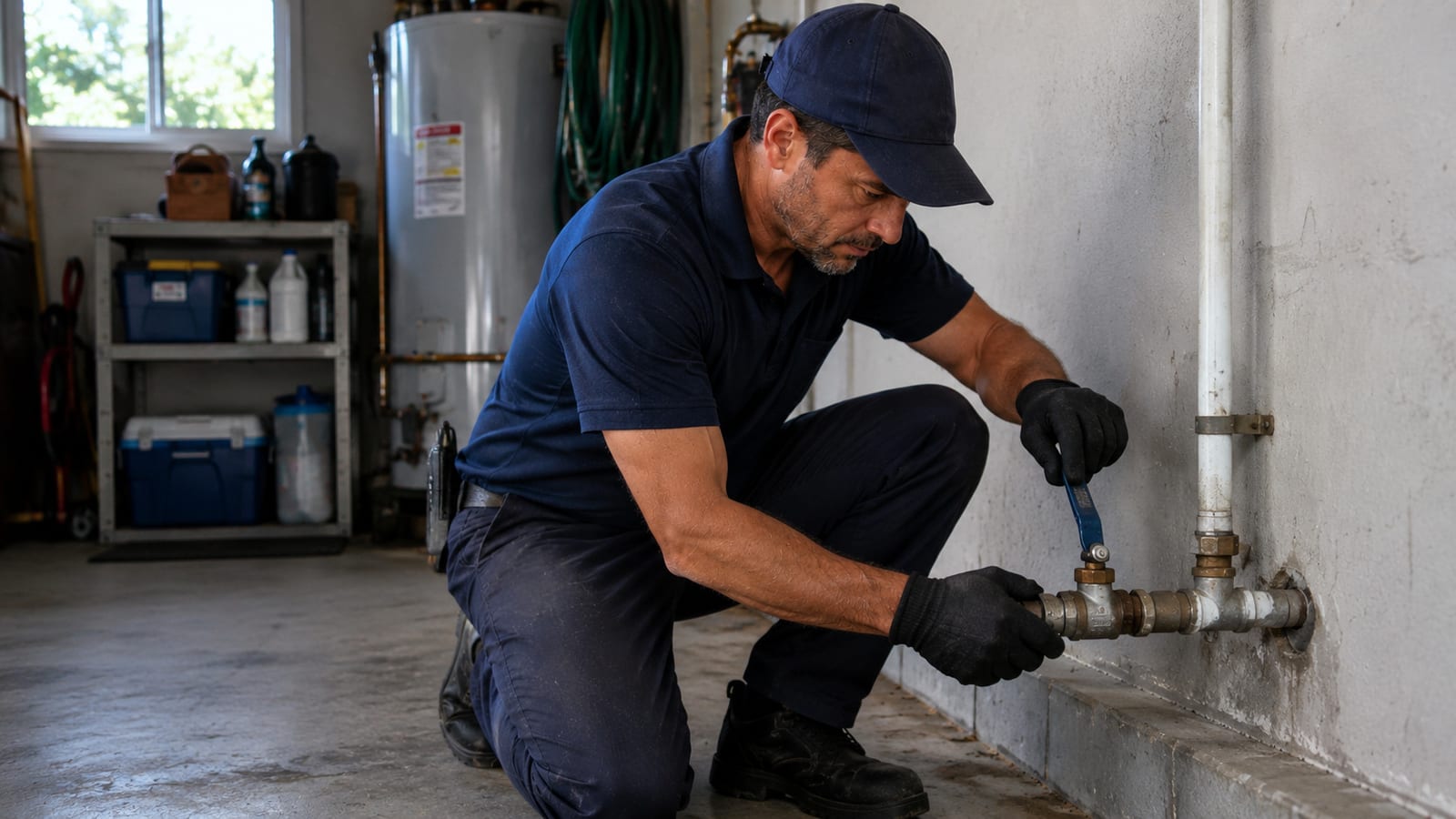
Many homes also have a second shut-off point closer to the house itself, often where the water line first enters the structure.
- Common locations include near a hose bib, inside the garage, in a laundry room, or along an exterior wall close to where the line enters a slab foundation.
- This valve is usually a lever-handle ball valve that turns a quarter turn to fully open or close.
- Because it is closer to the house, this valve is often faster to reach during an active leak than the curb stop.
How Home Age Affects Valve Location
- Older Orlando homes, particularly those built before the 1980s, are more likely to rely primarily on the curb stop, sometimes paired with an older gate-style valve that requires several full turns to close.
- Newer construction more commonly includes an accessible ball valve near the garage or laundry area in addition to the curb stop.
- Homes that have been repiped or renovated may have had the interior shut-off relocated, so it is worth confirming the current location rather than assuming it matches an older floor plan.
How to Safely Open a Meter Box
- Use a flathead screwdriver or a meter key to lift the lid rather than prying with your hands.
- Watch for insects, spiders, or standing water before reaching inside.
- Only operate the valve on your side of the meter. The valve directly at the meter itself typically belongs to the utility and should not be adjusted without authorization.
- If the box is difficult to open or the valve feels seized, avoid forcing it and note that it may need professional attention.
Testing Your Shut-Off Valve Once a Year
A valve that has never been touched can seize over time from mineral buildup, corrosion, or simple age, especially in Florida's humidity and water conditions. A valve that will not turn during an emergency is effectively the same as having no shut-off at all.
- Turn the valve fully closed, then open a nearby faucet to confirm water flow has actually stopped.
- Turn the valve back to fully open and confirm normal water pressure returns.
- Note any resistance, leaking around the valve stem, or difficulty turning it, and have it inspected before it becomes a problem.
Testing the valve once a year takes only a few minutes and gives you confidence that it will actually work when you need it most.
What Happens If Your Valve Doesn't Work in an Emergency
A stuck or broken shut-off valve during an active leak can turn a manageable situation into a serious one. Water damage from an undetected or unstoppable leak can quickly reach into the thousands of dollars once flooring, drywall, cabinetry, and mold remediation are factored in.
If your interior valve fails to close, the curb stop near the meter box serves as a backup, which is another reason it is worth knowing the location of both shut-off points rather than just one.
Label and Share the Location With Your Household
- Attach a simple tag or note near the valve so it is easy to identify quickly.
- Show other household members where the valve is located and how to operate it.
- Keep a flathead screwdriver or meter key stored near the meter box if one is required to access it.
- Consider noting the location in a home maintenance binder or a shared note on your phone.
A shut-off valve only helps if everyone in the household can find and use it under pressure, not just the person who happens to read this article.
If You Live in a Condo or Townhome
Condo and townhome layouts add another wrinkle, since a unit-level shut-off does not always control the entire supply line.
- Many units have a shut-off valve where the line enters the unit, but a shared riser or main line may still require a building-wide shutdown for certain repairs.
- Check with your HOA or property management about where any shared shut-off valves are located and who is authorized to operate them.
- If your unit does not appear to have its own accessible shut-off, ask a plumber to help identify or install one during a routine visit.
Finding Your Shut-Off Valve Fast in Orlando
Knowing your main water shut-off location, testing it annually, and making sure it turns freely are some of the most effective steps an Orlando homeowner can take to limit water damage before it starts. If you are not sure where your valve is, if it will not turn, or if you would rather have a licensed plumber test and service it, professional help can confirm your home is ready before an emergency happens.